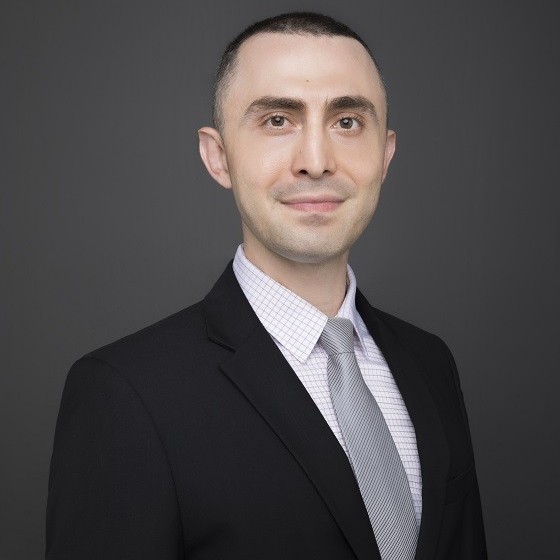
Dr. Mustafa Ozguven is an Associate Professor at Xi’an
Jiaotong-Liverpool University (XJTLU), where he is affiliated with
the Entrepreneurship and Enterprise Hub. Prior to his academic
appointment, he held senior executive leadership roles in
multinational organizations across the finance, technology, and
international development sectors, including Director-level, Chief
Marketing Officer, and Chief Executive Officer positions, as well as
advisory engagements with international institutions and
corporations.
Dr. Ozguven is an Honorary Research Fellow in the School for Data
Science and Computational Thinking at Stellenbosch University, Cape
Town, South Africa, Doctoral Supervisor at the University of
Nottingham Malaysia, and Visiting Professor at multiple
international higher education institutions. He serves as a reviewer
for SSCI Q1 journals and has published multiple papers in
SSCI-indexed outlets. He has delivered faculty training workshops
focused on AI-driven entrepreneurship at Stellenbosch University,
South Africa. His research lies at the intersection of
entrepreneurship, international business, and emerging technologies,
with particular emphasis on artificial intelligence, autonomous
vehicle technologies, and corporate social responsibility. A core
strand of his scholarly work focuses on the internationalization of
entrepreneurship education, examining how digitally enabled,
cross-border pedagogies foster entrepreneurial competencies, global
mindsets, and responsible innovation. He maintains extensive
academic and industry networks across Africa, Europe, the Americas
and Southeast Asia. He is committed to evidence-informed,
technology-enhanced, and industry-engaged learning, and regularly
contributes to international academic conferences and professional
development initiatives.
TBA
TBA
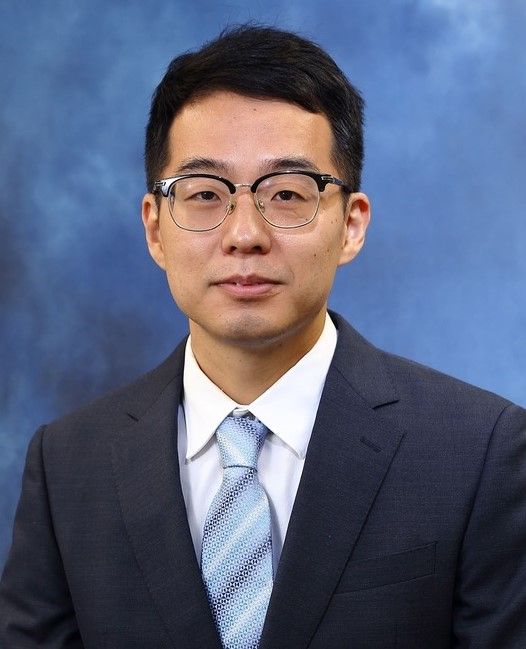
Dr. Dongkun Han is a Senior Lecturer in the Department of Mechanical and Automation Engineering at The Chinese University of Hong Kong. He received his Ph.D. in Electrical and Electronic Engineering from The University of Hong Kong, and has held research and visiting positions at the Technical University of Munich, the University of Michigan, Stanford University, and the German Institute of Science and Technology in Singapore. His educational research focuses on artificial intelligence in mathematics and general education, e-learning and experiential learning in robotics education, and professional development for engineering educators. He also co-founded the CUHK Smart Garden to promote sustainability education and Sustainable Development Goals through renewable energy and recycling initiatives. Dr. Han has served in various leadership roles for international conferences. His learner-centred teaching has been recognized by the Vice-Chancellor’s Exemplary Teaching Award, the University Education Award, and multiple faculty and general education teaching awards.
Human-Centred AI for Personalized Engineering Education: From Learner Data to Adaptive Learning
Artificial intelligence offers significant opportunities to transform learner data into timely, personalized, and actionable educational support. However, many AI-enabled learning systems remain difficult for educators and students to interpret, particularly when they are developed using small and continuously evolving classroom datasets. These challenges raise important questions about transparency, data efficiency, educational relevance, and the responsible integration of AI into engineering education. This invited talk presents a human-centred and explainable approach to personalized learning, using adaptive mathematics education as a practical case study. At the core of the approach is Dynamic Distance-Weighted k-Nearest Neighbors, or DDW-kNN, a data-efficient method that dynamically adjusts the relative importance of learner characteristics, assessment performance, and learning-resource features as new evidence becomes available. Rather than functioning as a black-box prediction model, the method generates interpretable proficiency estimates and recommendations by identifying relevant neighboring learners, assessment patterns, and learning resources.
The approach is implemented through a closed-loop personalized
learning framework comprising iTest, which generates adaptive
assessments and estimates learner proficiency, and iLearn, which
recommends readings and instructional videos aligned with individual
mastery levels. Drawing on classroom implementation and evaluation,
the talk will discuss the framework’s design principles, practical
considerations, and lessons learned from integrating explainable
learner modelling, adaptive assessment, and personalized content
recommendation. Beyond mathematics education, the talk will explore
how transparent and data-efficient AI can support learner-centred
teaching, educator decision-making, and adaptive learning across
engineering disciplines. It will conclude by discussing
opportunities and challenges in developing responsible, scalable,
and pedagogically meaningful AI-enabled learning environments for
future engineering education.
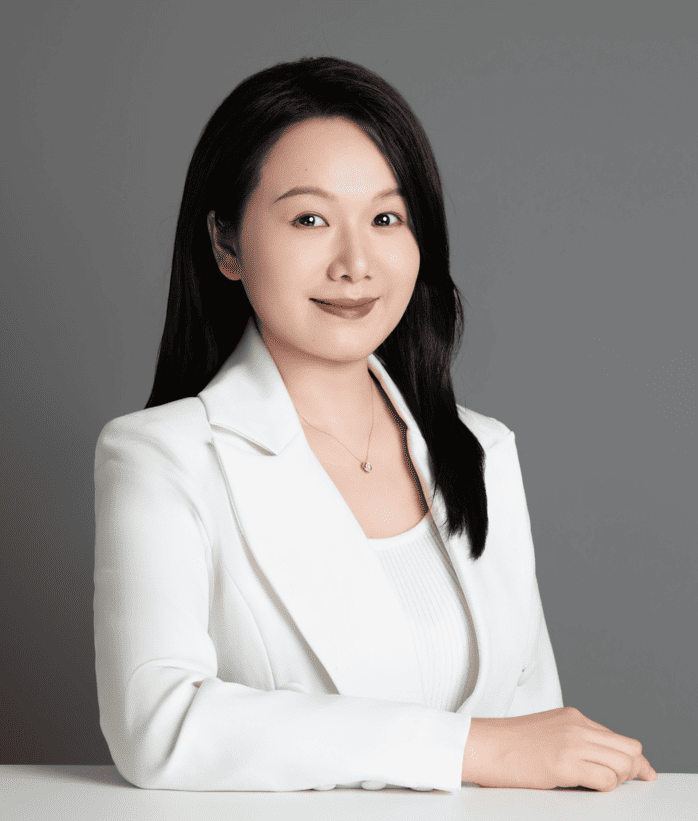
Dr. Liqiao Nong is an Associate Professor at the School of Humanities and Education, Guangxi Polytechnic of Construction, China. She earned her PhD in Curriculum and Teaching Methodology from Southwest University of China. Her research interests include educational theories from the perspective of technology philosophy, human-machine symbiosis, and the application of artificial intelligence in education. Dr. Nong is a qualified Educational Technology Engineer and a senior member of the Institute of Educational Technology. She holds multiple academic positions as track co-chair, technical member, peer reviewer and session chair of numerous international conferences including ICAIE, ICEIT, EITT and GCCCE. She serves as a peer reviewer for international journals including Journal of Applied Research in Higher Education. She serves as an academic advisor for students from Springboro High School, USA, and has delivered invited speeches at many domestic and international academic conferences. She is PI of several provincial research projects and has participated in multiple national research projects. She has published over ten papers in SSCI, CSSCI, EI journals and international conferences. Her research has won multiple Best Paper Awards at international academic events.
Human-Machine Symbiosis in Intelligent Education: An Information Theory Perspective
In the intelligent era, the deep integration of artificial intelligence and education reshapes the information exchange process between humans and educational technologies. Existing discussions of human-machine symbiosis in teaching mainly focus on collaborative forms and practical pathways, while insufficient attention has been paid to the information transmission rules, cognitive load, and information asymmetry embedded within intelligent educational systems. This study re-examines the human-machine symbiosis (HMS) framework from the lens of modern information theory. It analyzes multi-form intelligent teaching and learning scenarios, and unpacks the internal mechanisms of human-machine symbiosis, aiming to advance symbiotic relationships that foster human well-being rather than merely pursue technological efficiency. Finally, it proposes practical realization paths for human-machine symbiosis oriented to high-quality intelligent education.
More speakers will be announced soon.